

How to Select Metal Surface Treatment Processes? A Selection Guide Based on Service Environments
* : * : admin * : 2026-10-19 11:19:30 * : 0
How to Select Metal Surface Treatment Processes? A Selection Guide Based on Service Environments
The core purposes of metal surface treatment are corrosion prevention, wear resistance improvement and aesthetic enhancement. Service environments impose vastly different requirements on workpieces. Improper process selection may lead to coating peeling, rusting and delamination. Enterprises shall comprehensively consider ambient humidity, acid and alkali exposure, temperature conditions and aesthetic requirements to adopt suitable surface treatment solutions.
For dry indoor environments such as ordinary equipment frames and indoor mechanical components, corrosion risks are low. Powder coating or liquid painting is preferred, featuring moderate cost and diverse appearance options to achieve basic rust protection and decorative effects. If workpieces require assembly fit and high dimensional accuracy, passivation is recommended. It forms a dense protective film without altering workpiece dimensions.
Humid environments include workshops, basements and coastal areas with high moisture content. Coastal air contains salt spray that accelerates corrosion. Hot-dip galvanizing or zinc-nickel alloy electroplating is recommended for outstanding salt spray resistance to resist moisture and salt erosion over a long period. Composite processes such as galvanizing followed by coating can be adopted if attractive appearance is also required to extend service life further.
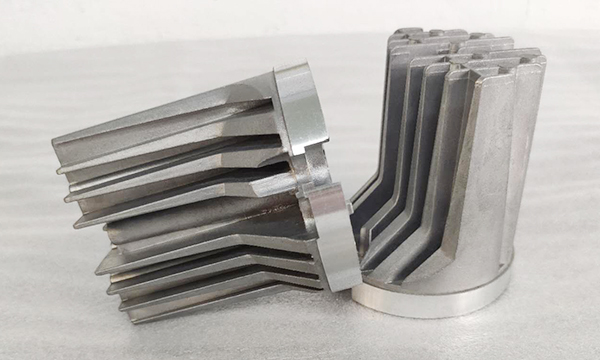
For environments with acid and alkali corrosion, such as chemical equipment and wastewater fittings exposed to corrosive media, conventional galvanizing and painting are insufficient. Fluorocarbon coating, passivation plus sealing treatment or stainless steel with polishing can be selected. For heavy-duty corrosive conditions, Teflon coating delivers excellent chemical resistance.
For outdoor applications, workpieces are exposed to sunlight, rain and temperature fluctuations. Anti-aging performance is the priority. Powder coating and fluorocarbon coating are top choices. Ordinary paint tends to fade and degrade under long-term outdoor exposure. For fasteners, Dacromet coating provides both corrosion resistance and heat resistance.
Other product requirements should also be considered. Insulating coatings are not suitable for conductive parts. Phosphating or hard chrome electroplating can be applied to moving friction parts to boost wear resistance. Cost alone should not dominate the selection; the actual service environment is the key factor. A proper surface treatment process extends workpiece service life, reduces maintenance and controls overall costs.
next item: How to Select Coatings for Metal and Plastic Coating? Key Points for Material and Paint Selection


 关闭返回